EU AI Act Resource Center

Infographic showing the EU AI Act implementation timeline from 2024 to 2027 with key milestones including the entry into force, prohibited AI bans in 2025, main obligations in 2026, and final high-risk compliance deadlines in 2027

EU AI Act Implementation Timeline: What Applies in 2024, 2025, 2026 and 2027

Updated May 2026 to reflect the Digital Omnibus agreement of 7 May 2026, which pushes the AI Act high-risk enforcement deadline from August 2026 to December 2027. The EU Artificial Intelligence Act introduces the world’s first comprehensive regulatory framework for artificial intelligence. But unlike many laws that apply immediately, the AI Act follows a phased […]

EU AI Act Implementation Timeline: What Applies in 2024, 2025, 2026 and 2027 Read More »
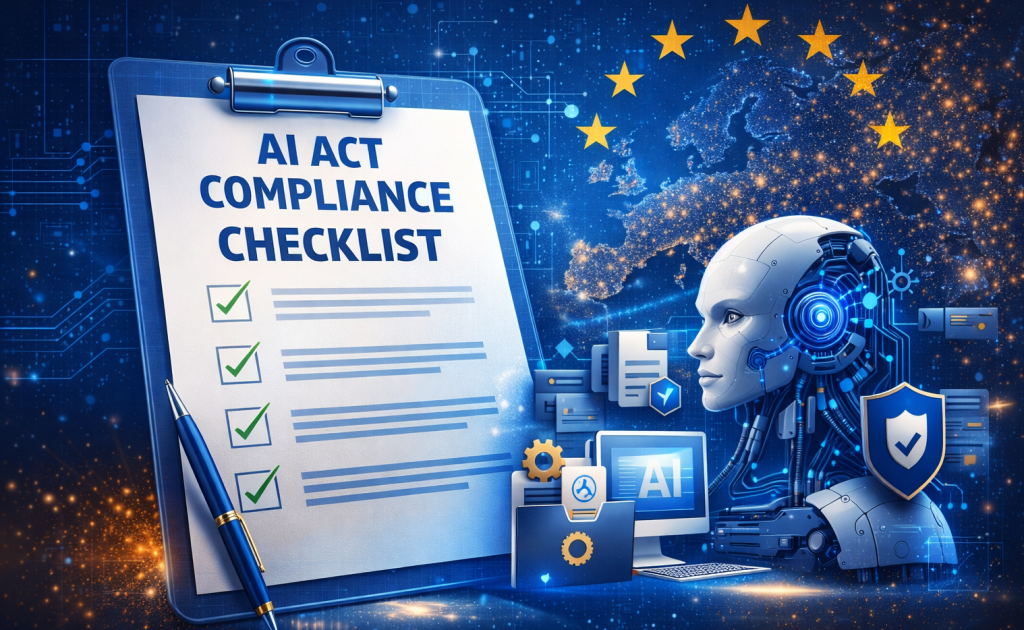
Digital illustration of an EU AI Act compliance checklist for businesses showing a checklist document, AI system icons and the European Union stars representing regulatory compliance.

Tool: AI Act Compliance Checklist for SMEs

Download the AI Act Compliance Checklist The EU AI Act introduces the first comprehensive regulatory framework for artificial intelligence. For many companies — especially small and medium-sized enterprises (SMEs) — the regulation can appear complex and difficult to translate into practical steps. This AI Act Compliance Checklist for SMEs provides a clear operational starting point.

Tool: AI Act Compliance Checklist for SMEs Read More »

Illustration of EU AI Act compliance checklist for SMEs showing business professionals reviewing AI governance requirements, checklist documents, and an AI chip symbol against a European Union regulatory technology background.

AI Act Compliance Checklist for SMEs

A Practical Guide for Companies Using AI in Europe The EU AI Act introduces the world’s first comprehensive legal framework governing artificial intelligence. While the regulation is often discussed in the context of large technology companies, small and medium-sized enterprises (SMEs) will also face concrete obligations when they develop, deploy, or use AI systems. For

AI Act Compliance Checklist for SMEs Read More »

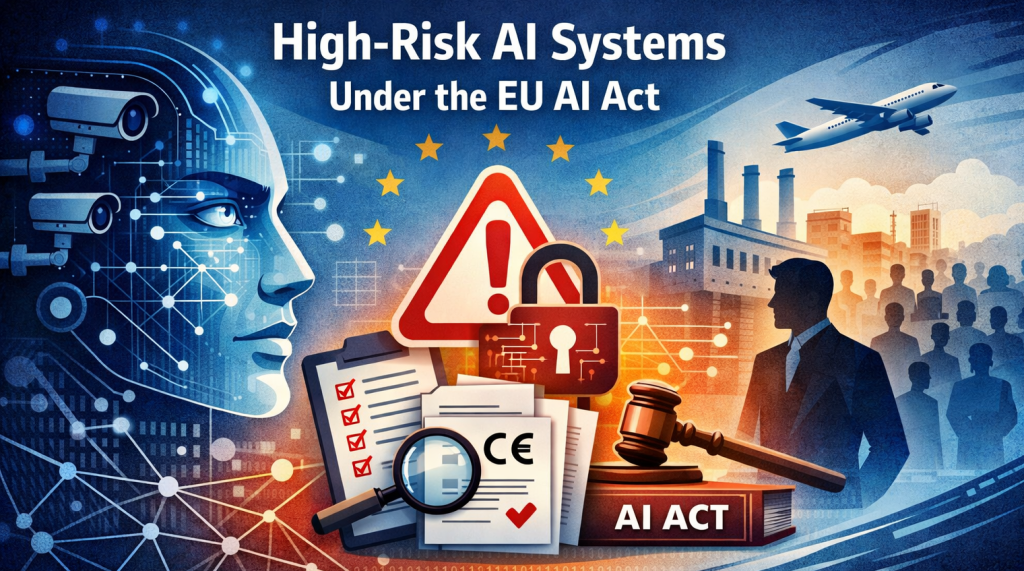
ai act high risk

High-Risk AI Systems Under the EU AI Act

Artificial intelligence systems that fall into the high-risk category are subject to the most comprehensive regulatory obligations under the EU AI Act. For companies operating in Europe, identifying whether an AI system qualifies as high-risk is a critical first step. High-risk classification triggers a set of legal requirements relating to documentation, risk management, transparency and

High-Risk AI Systems Under the EU AI Act Read More »

EU AI Act risk categories diagram

EU AI Act Risk Categories Explained

The AI Act risk categories are the foundation of the EU Artificial Intelligence Act.Every AI system used or deployed in the European Union falls into one of four regulatory risk levels, which determine the compliance obligations that companies must follow. Understanding these categories is the first step for any organization that develops, deploys, or integrates

EU AI Act Risk Categories Explained Read More »